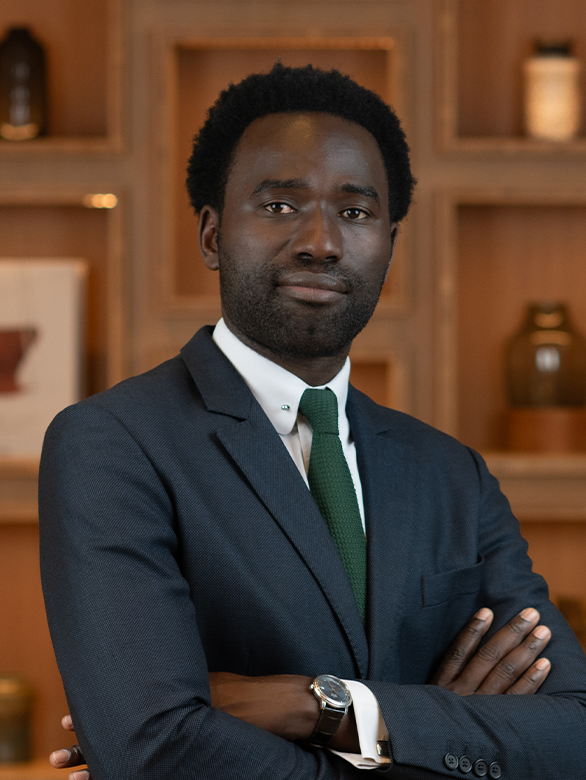
3 Questions to Magueye Gueye, Partner and Head of the Dakar Office
1. Dakar is emerging as a major regional hub in West Africa. What key factors make it a strategic location for international investors?
Senegal benefits from recognized institutional stability, a harmonized legal framework within the OHADA[1] scope, and WAEMU[2] membership, thus offering investors considerable visibility. Added to this is the authorities’ clear commitment to strengthen the country’s attractiveness and improve the business climate.
Dakar’s geographic position makes it a true gateway to French-speaking West Africa. The establishment of the World Bank’s regional headquarters for West Africa, the presence of numerous international financial institutions, and the development of key infrastructure further reinforce this role as a regional hub. In a context where investors seek both legal security and certainty, as well as growth potential, Dakar strikes a particularly attractive balance.
2. Which sectors currently hold the greatest potential for growth in Senegal and, more broadly, across Sub-Saharan Africa?
Energy plays a central role in both the exploitation of gas and oil resources and the roll-out of energy transition projects. Infrastructure (transportation, logistics, urban planning) is also a major growth driver, often structured through complex financing arrangements or public-private partnerships.
Mining and natural resources remain strategic, while the digital and innovation sectors are experiencing sustained momentum, driven by a young and connected population. There is also growing sophistication in transactions, with an increased use of project finance and pan-African or international investment structures. West Africa is now attracting European, Middle Eastern, and Asian investors that are adopting a long-term perspective.
3. How does Gide’s local presence in Dakar strengthen the support it provides its clients operating in Africa?
Our presence in Dakar allows us to provide support that is firmly grounded in local realities. Close relationships with both public and private decision-makers, combined with an in-depth knowledge of local stakeholders, are decisive advantages when navigating complex transactions.
This presence also boosts our ability to efficiently coordinate cross-border transactions, working in close collaboration with our other offices and partners. We thus combine international technical expertise with a thorough understanding of local dynamics, so as to offer our clients an integrated, legally sound, and pragmatic approach.
Beyond one-off transactions, our ambition is to provide lasting support for our clients’ growth across the African continent, delivering both strategic vision and legal excellence.
[1] OHADA: Organisation pour l’Harmonisation en Afrique du Droit des Affaires – Organization for the Harmonization of Business Law in Africa
[2] West African Economic and Monetary Union – UEMOA: Union économique et monétaire ouest-africaine